
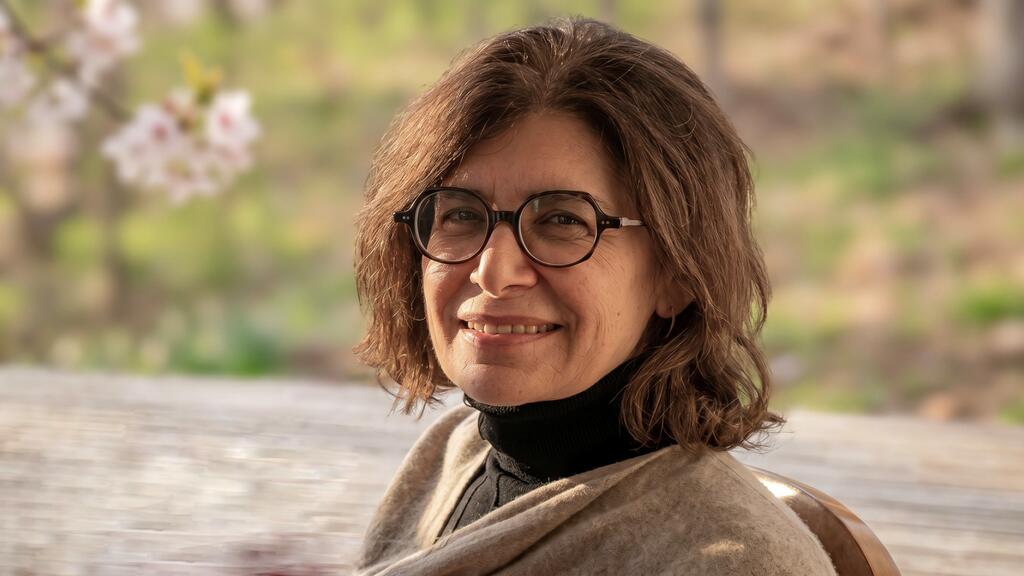
Persheng Vaziri ’15 joined the Media and Communication Doctoral program with extensive experience as a filmmaker under her belt. She had produced several projects for Internews Network on documentary films in Iran, had met and worked with several filmmakers and helped organize a festival of international and Iranian documentary films. “When I began thinking about my dissertation, I recognized that this experience was very valuable and unique” Vaziri said. She decided the filmmakers she had met in Iran would be the focus of her work.
The research phase of the project lasted from 2011 to 2013 and was supported in part by a fellowship with the Center for the Humanities at Temple (CHAT) and funding from the University of Pennsylvania’s Center for Global Media Program. “This study helped me understand what participant observation is and improve my observations and interviews” she said. After about a year of writing, she successfully defended the dissertation in 2015.
Turning the dissertation into a book while carrying a heavy teaching load proved to be a new challenge. “After teaching for a year or two at Penn State Harrisburg, I began to think about writing the book based on my dissertation. This was because I was visiting Iran every year and seeing the filmmakers’ careers grow and evolve” Vaziri said. “But I was very busy with teaching and could not dedicate much time to writing.”
In 2020, the global pandemic provided a chance for Vaziri to focus on her writing again, until restrictions were lifted and she began teaching at Hofstra University in New York. “After another year of teaching, I decided to reduce my work and focus on completing [the book]” she said. “I took some writing residencies and finally finished the manuscript in 2025. We spent more than six months to edit and complete the index and other addendum with the publisher’s team.”
Her passion for the subject and her personal connections to the place she studies kept her going throughout the process. “I think if you work on a dissertation project that is important to you personally and is valuable to media or communications scholarship, you will continue to want to work on it, even after graduation” Vaziri said. The continuing support of the research community she had built in the M&C program was also instrumental in her success. She encourages junior scholars to build strong relationships with their committee and advisor that extend beyond the dissertation into “the future steps you take to complete your book.” “My advisor, Dr. Patrick Murphy was crucial in giving me advice, reviewing my work, and encouraging me that the book project was worthy of completion” she said.
The book Documenting Iran: Filmmakers and social change was published in August by University of Texas Press. Drawing on interviews and participant observation, it describes the creative practices and pragmatic choices that provide documentarians relative independence from state censorship and other restrictions on artistic production and allows them to create an activist cinema both subtle and persuasive enough to challenge dogmatic rule and uphold progressive elements of Iranian society. Vaziri will further discuss her work at a Graduate Speaker Series event on Friday, October 9 from 1:30–3:00 p.m. in Annenberg Hall, Room 304.